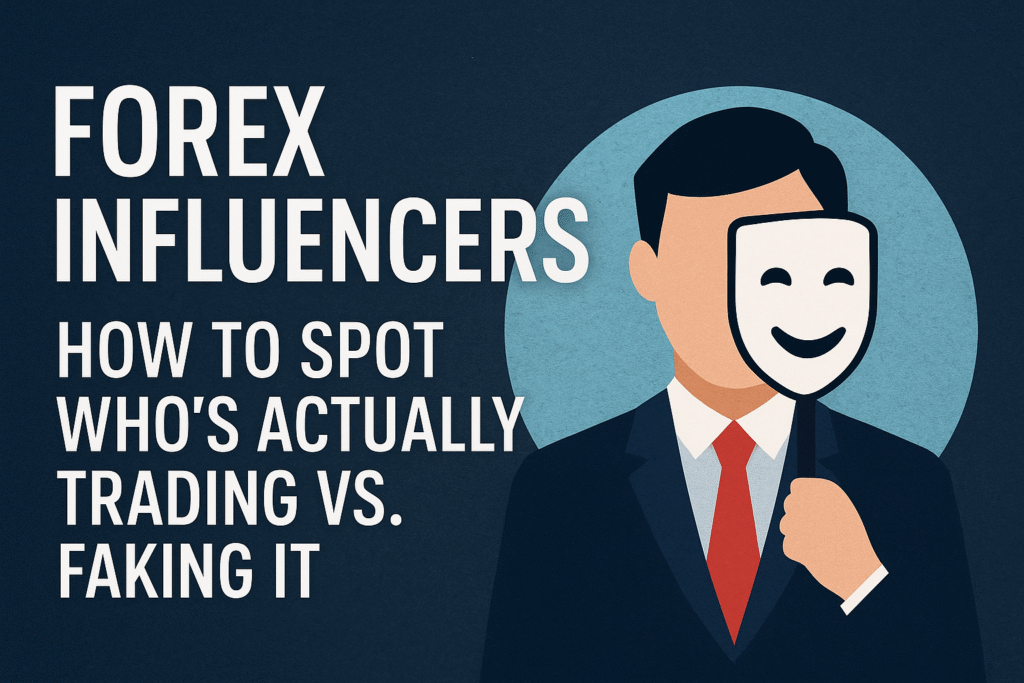
Forex Influencers: How to Spot Who’s Actually Trading vs. Faking it
📑 Table of Contents
Introduction — The Rise of Forex Influencers
The Forex Influencer Economy — How Social Media Turned Traders into Brands
Why People Fall for Fake Forex Influencers
The “Highlight Reel” Illusion — How Lifestyle Marketing Deceives Followers
The Fake Profit Screenshot Scam — Inside the Illusion of Success
Real vs. Fake Forex Influencers — Key Differences You Must Know
The Business Behind Forex Influencer Marketing
The Signal Group Trap — How Paid Signals Mislead Beginners
The Cost of Believing in Fake Forex Influencers
The Art of Verification — How to Confirm Real Traders
Red Flags Every Follower Should Notice
How Genuine Forex Influencers Build Trust
Tools & Data to Fact-Check Forex Influencers
Psychological Traps Influencers Exploit
The Ethics Crisis in the Forex Influencer Industry
Building a Scam-Resistant Mindset
The Future of Forex Influencer Culture
How to Choose the Right Forex Influencers to Follow
Case Study: Real vs. Fake Influencer Comparison
Why Influencer Awareness Matters for Forex Traders
Conclusion — Truth Over Hype in the Forex World
FAQs — Common Questions About Forex Influencers
Introduction
In recent years, a new breed of online celebrities has emerged — Forex Influencers. These are individuals who claim to have mastered the art of foreign exchange trading and share their “success” stories across Instagram, YouTube, and X (Twitter). They flash luxury cars, post screenshots of trading profits, and boast about financial freedom.
But here’s the uncomfortable truth — for every genuine trader sharing real insights, there are dozens faking their results, selling courses, or manipulating social proof for clout. The Forex influencer world is booming, but it’s also becoming a playground for deception.
This article dives deep into the phenomenon of Forex Influencers — who they are, why they’ve become powerful voices in finance, and how to tell whether they’re actually trading or just acting.
1. The Rise of the Forex Influencer Economy
Forex trading has always fascinated people. The idea that you can trade currencies from your laptop and earn thousands in a day sounds almost mythical. As social media exploded, this dream became more visual — influencers started turning trading into a lifestyle brand.
Platforms like Instagram and YouTube made it easy for anyone to build a “financial expert” persona. By posting daily market analysis, trading setups, and motivational videos, many Forex Influencers gained massive followings — especially among young people chasing financial independence.
But here’s what most followers don’t realize: the Forex influencer economy often thrives not from trading profits — but from selling the idea of trading profits.
Many influencers earn more through:
Paid mentorship programs and “signal groups”
Affiliate links for brokers
Brand sponsorships and course sales
Paid promotions and ads
In short, a large percentage of Forex Influencers are marketers first and traders second.
2. Why People Fall for Fake Forex Influencers
It’s easy to see why fake influencers flourish. The Forex market is complex, intimidating, and full of jargon. Most beginners have no frame of reference to verify whether someone’s trades are legitimate or not.
Add social media psychology — constant exposure to luxury lifestyles, promises of quick success, and carefully curated highlight reels — and people fall into the trap of believing what they see.
Key psychological factors that make people believe fake Forex Influencers include:
Authority bias: Followers assume large accounts must be credible.
Social proof: Thousands of likes and comments create an illusion of trust.
Aspirational marketing: Flaunting wealth creates emotional buy-in.
Scarcity tactics: “Limited spots” in courses or “exclusive groups” push impulsive buying.
The combination of ignorance and emotional manipulation turns fake Forex influencers into some of the most effective salespeople online.
3. The “Highlight Reel” Illusion
One of the oldest tricks in the book is curated illusion — showing only the wins, never the losses. Real traders know that losing trades are part of the process, but fake influencers rarely admit that.
They post:
Edited screenshots showing fake profits
Rented cars, apartments, and luxury items
Graphs and charts taken from other analysts
Blurry MetaTrader screenshots with manipulated numbers
Social media allows anyone to build a fantasy narrative — one that looks profitable but is purely theatrical.
A real trader’s account will often show equity curves with fluctuations, real-time trade logs, or verified broker accounts. Fake influencers avoid all of that because transparency kills their illusion.
4. How the “Fake Profit Screenshot” Scam Works
One of the most common tools of deception is the fake profit screenshot. Using apps or web tools, influencers manipulate their trading results to show inflated returns.
There are multiple ways this is done:
Editing MetaTrader 4 (MT4) or MT5 screenshots using HTML inspection tools.
Creating “demo accounts” and pretending they’re real trades.
Using fake trading apps built just for showing artificial profits.
Buying or renting trading history from other traders.
Followers who don’t know how these systems work assume everything is legitimate. In reality, it’s just a digital stage act designed to trigger envy and trust.
Whenever you see someone posting a trading profit screenshot without context or third-party verification, assume it’s fake until proven otherwise.
5. Real Forex Influencers vs. Fake Gurus
Let’s be clear — not all Forex Influencers are frauds. Some genuinely trade, share valuable insights, and help the community grow. The challenge is separating them from the noise.
Here’s a comparison:
| Category | Real Forex Influencers | Fake Forex Influencers |
|---|
| Trading Proof | Verified results via MyFXBook or broker statement | Unverified screenshots |
| Content Focus | Education, analysis, risk management | Luxury lifestyle, flexing profits |
| Transparency | Admits losses, discusses strategy evolution | Only shows winning trades |
| Business Model | May monetize through education but primarily trade | Makes money selling courses and signals |
| Community Impact | Builds informed traders | Exploits emotional followers |
Real influencers often post risk analysis, daily market reviews, and macro insights, while fake ones focus on flashy results and emotional bait.
6. The Business Behind Forex Influencer Marketing
Behind the scenes, many “influencers” are backed by affiliate deals with brokers. They earn commissions when their followers open trading accounts.
While not unethical in itself, it becomes manipulative when they push high-risk brokers or exaggerate profits just to earn referral income.
Some Forex Influencers even collaborate with unregulated brokers that offer high leverage and poor withdrawal systems — putting followers’ money at risk.
Here’s how the funnel usually works:
The influencer flaunts fake success.
Followers ask how to start.
Influencer sends a referral link to a broker.
The follower deposits money and loses it.
The influencer earns a commission from that loss.
It’s not mentorship — it’s exploitation disguised as education.
7. The “Signal Group” Trap
Signal groups — private Telegram or WhatsApp channels where influencers send “buy/sell” calls — are another major red flag.
While some professionals genuinely share insights, most signal groups are nothing more than gambling clubs. They sell the illusion of “copying success,” but there’s no proof of consistent results.
Fake influencers often use these groups to:
Create false credibility (“my signal hit 100 pips today”)
Push affiliate links to brokers
Manipulate followers into recurring subscriptions
A real trader won’t guarantee returns. Anyone who does is lying — because in Forex trading, even the best strategies lose sometimes.
8. The Cost of Believing in Fake Forex Influencers
Beyond financial loss, fake influencers damage the credibility of the entire trading community.
Thousands of beginners lose trust in the market after being scammed or misled. They associate Forex with fraud, not with disciplined trading.
This creates a toxic cycle:
Newcomers enter the market for quick money.
They follow fake influencers and lose.
They quit, claiming “Forex is a scam.”
The real tragedy? Genuine traders and educators get drowned out by noise.
Forex Influencers: How to Spot Who’s Actually Trading vs. Faking It
9. The Art of Verification — How to Confirm if a Forex Influencer Is Legit
The easiest way to identify a fake Forex Influencer is to ask for proof — but knowing what kind of proof matters. Real traders leave a paper trail. Fake ones leave digital illusions.
Here are practical verification methods every trader or follower should know:
a. Look for Third-Party Verification
Legit traders use MyFXBook, FX Blue, or TraderView to publicly track performance. These platforms connect directly to trading accounts and automatically log all trades, wins, losses, and drawdowns.
If an influencer refuses to share a verified link — or claims they “can’t show due to privacy” — that’s a major red flag. Transparency is the foundation of real credibility.
b. Analyze Their Risk-Reward Pattern
Even profitable traders face losses. If someone claims to win every single trade, they’re lying.
A real account should show:
Win rate between 50–70%
Risk/reward ratio close to 1:2 or better
Occasional drawdowns or losing streaks
Consistent profits with realistic numbers show real discipline. Unrealistic perfection signals manipulation.
c. Check Consistency Over Time
A common trick among fake Forex Influencers is to showcase profits from a single month — then disappear when results turn negative.
Always check their long-term equity curve. Real traders show steady growth; fake ones only show short-term spikes.
d. Verify Broker Partnerships
If an influencer promotes a specific broker, check whether that broker is regulated by bodies like the FCA (UK), ASIC (Australia), or CySEC (Cyprus).
Unregulated offshore brokers are breeding grounds for scams.
If their link leads to a shady broker in the Caribbean with 1:1000 leverage — run.
10. Red Flags Every Follower Should Notice
Many fake influencers give away their own lies through behavior. Once you know what to look for, spotting them becomes easy.
Here are common red flags of fake Forex Influencers:
No verified track record. Only edited screenshots or “testimonials.”
Focus on lifestyle, not analysis. More Lamborghini content than chart explanations.
Overpromising results. Claims of “100% profit in one week.”
Paid mentorship pressure. Constant DMs pushing courses or “private groups.”
Emotional manipulation. “You don’t believe because you’re scared of success.”
No mention of risk management. Genuine traders obsess over risk. Fakes don’t.
Overuse of motivational clichés. “Hustle hard, trust the grind, and pips will flow.”
If the account feels like a get-rich-quick scheme, that’s exactly what it is.
11. How Genuine Forex Influencers Build Trust
Now, let’s look at the other side — the authentic Forex Influencers who actually trade and educate.
They build credibility slowly, through substance rather than spectacle.
Here’s how they typically establish trust:
a. Transparent Communication
They discuss not only profits but also mistakes. A real trader might post:
“Took a loss on EUR/USD today. Entry was premature — misjudged liquidity zone.”
That’s honesty. Fakes never admit errors because their brand depends on perfection.
b. Educational Focus
Instead of bragging, they teach. They share breakdowns of price action, technical setups, and psychology — helping followers understand why trades succeed or fail.
Their content often includes:
Free webinars or analysis sessions
Trade journaling techniques
Money management discussions
Cautionary lessons about leverage and risk
These influencers trade and educate — not just sell hope.
c. Long-Term Presence
Real Forex Influencers stick around for years. They don’t vanish after a bad month. They evolve, adapt, and show growth — not just temporary glory.
Consistency builds credibility faster than any screenshot ever could.
12. The Tools and Data You Can Use to Fact-Check Influencers
If you’re serious about not being fooled, arm yourself with data.
Here are free and paid tools that can help verify who’s real:
| Tool | Purpose | How It Helps |
|---|
| MyFXBook | Track verified trading accounts | Exposes fake performance claims |
| FX Blue | Detailed trade analytics | Reveals real equity and drawdown |
| MQL5 Signals | Public trading signals | Lets you compare promises with actual results |
| TrustPilot / Reddit Reviews | Community feedback | Uncovers scam complaints |
| Regulator databases (FCA, ASIC) | Broker verification | Ensures broker legitimacy |
| Chart screenshots vs. live feeds | Spot editing inconsistencies | Filters out photo manipulation |
A quick background check can expose months of deception. Most scammers rely on followers who don’t verify anything.
13. Psychological Traps Influencers Exploit
The battle isn’t just on charts — it’s in your head. Fake Forex Influencers are masters of psychological manipulation.
Here’s how they trap followers:
Fear of Missing Out (FOMO):
“Everyone’s getting rich but you’re not.” This pushes impulsive buying of courses or signals.Authority Illusion:
They claim “10 years of trading experience” without verifiable proof.Lifestyle Envy:
You see luxury — you assume competence. It’s emotional leverage disguised as financial advice.Guilt Reversal:
When you doubt them, they say “you’re too negative to succeed.” That flips self-doubt into compliance.
Understanding these tactics gives you immunity. Real financial education is built on data, not dopamine.
14. The Ethics Crisis in the Forex Influencer Industry
The influencer industry in finance is largely unregulated. Anyone can call themselves a “professional trader” and start selling dreams.
This lack of oversight has created a dangerous grey zone — where frauds thrive under the banner of motivation and “financial literacy.”
The biggest issue? No accountability.
Most fake Forex Influencers operate through offshore companies, making legal action nearly impossible.
Until social platforms enforce stricter verification for financial content, followers must take responsibility for due diligence.
15. Building a Scam-Resistant Mindset
No matter how flashy an influencer looks, your mindset determines whether you fall for scams or not.
Here’s how to build a scam-resistant mentality:
Skepticism over excitement: Always assume claims are exaggerated. Verify first.
Learn basic trading fundamentals: Understanding charts, pips, and leverage helps you spot nonsense faster.
Focus on verified data: Numbers matter more than luxury cars.
Avoid emotional decisions: If something triggers envy or urgency, step back.
Remember: Real traders talk about risk. Fakes talk about rewards.
Knowledge is the ultimate defense in a market full of illusions.
16. The Future of Forex Influencer Culture
The next few years will redefine what it means to be a Forex Influencer.
As audiences grow smarter, fake gurus will find it harder to survive.
We’re already seeing a shift toward data transparency, live trading streams, and regulator-certified educators. Influencers who adapt to this model — focusing on real value — will dominate the next era.
At the same time, platforms like YouTube and TikTok are beginning to label financial content, much like “sponsored ads,” to curb misinformation.
The future belongs to those who trade openly, teach honestly, and respect their followers’ intelligence.
17. How to Choose Which Forex Influencers to Follow
If you’re serious about learning from influencers, use these 5 filters:
Proof of Consistent Trading:
Verified account links over multiple months.Educational Depth:
Do they explain why a trade worked or just show that it worked?Community Feedback:
Check reviews, Reddit discussions, or Telegram feedback before trusting anyone.Transparency on Income Sources:
Real influencers clarify whether they earn from trading, affiliate links, or both.Tone and Intent:
Are they empowering or manipulating you? Genuine educators don’t guilt-trip their followers.
By applying these filters, you’ll naturally gravitate toward authentic voices.
18. Case Study: The Real vs. The Faker
Let’s break it down with a real-world-style contrast.
Trader A — The Real One
Shows verified MyFXBook account
Explains setups with entry/exit logic
Shares losing trades openly
Posts free education on risk management
Doesn’t flaunt wealth
Result: Small but loyal audience. Trusted community. Sustainable brand.
Trader B — The Faker
Posts Lambo photos, fake MT4 screenshots
Sells “VIP Signal Group” for $100/month
Promises guaranteed profits
Deletes old posts after losing streaks
Result: Large following, high churn, eventual collapse.
In the long term, integrity compounds just like trading returns. The audience eventually learns who’s real.
19. Why Influencer Awareness Matters for the Forex Industry
The rise of Forex Influencers has reshaped how people perceive currency trading.
While some genuinely democratize financial education, the fake ones distort the market’s image and scare away new investors.
Educating the audience about authenticity helps:
Clean the reputation of Forex trading
Encourage transparency and accountability
Attract real talent to the industry
If traders and followers start demanding proof, the scammers will fade faster than their rented cars.
🏁 Conclusion: In a World of Forex Influencers, Truth Is the Rarest Currency
The rise of Forex Influencers has transformed trading into a social spectacle. Platforms like Instagram and YouTube have turned trading profits into performance art — blurring the line between education and entertainment.
But here’s the truth: real trading isn’t glamorous. It’s technical, disciplined, and emotionally demanding.
Fake influencers sell the dream. Real traders live the grind.
The difference lies in proof, consistency, and transparency.
If an influencer can’t show verified results, avoids questions about losses, or spends more time flaunting than explaining — they’re not trading; they’re performing.
The responsibility isn’t just on influencers — it’s on us, the audience. Verify before believing. Learn the basics of trading, question screenshots, and demand authenticity.
Because in the end, financial freedom doesn’t come from following influencers — it comes from understanding the markets yourself.
In Forex, trust is earned, not claimed.
And the smartest traders follow evidence, not hype.
❓ Frequently Asked Questions (FAQs) on Forex Influencers
1. Who are Forex Influencers?
Forex Influencers are individuals who share content about foreign exchange trading on platforms like Instagram, YouTube, and X (Twitter). Some are genuine traders providing education and analysis, while others fake profits to sell mentorship programs, courses, or affiliate deals.
2. How can I tell if a Forex Influencer is real or fake?
Look for verified proof of trading performance through platforms like MyFXBook, FX Blue, or MQL5.
Fake influencers usually:
Avoid showing verified accounts
Post only winning trades
Use demo accounts or edited screenshots
Focus more on luxury than education
3. What is the main source of income for most Forex Influencers?
Most influencers earn more from course sales, affiliate commissions, and signal groups than from actual trading profits.
Real traders rely primarily on consistent trading performance, not marketing schemes.
4. Are all Forex Influencers fake?
No — some are highly skilled, transparent traders who share real analysis, explain losses, and promote risk management.
The key is to differentiate educators from entertainers.
A genuine influencer focuses on long-term learning, not instant profits.
5. What’s the biggest red flag in a Forex Influencer’s content?
The biggest red flag is guaranteed profits or “risk-free” trading claims.
Forex is inherently risky. Anyone promising easy, fast, or consistent profit every day is lying.
Legitimate traders talk about risk, strategy, and loss recovery, not shortcuts.
6. Are Forex signal groups worth joining?
In most cases — no.
The majority of “VIP signal groups” are unverified and run by fake traders.
If you do join one, always demand third-party verified results and never risk more than you can afford to lose.
7. Can Forex Influencers help beginners?
Yes — but only the real ones.
Follow those who:
Post educational content
Explain strategy and psychology
Share verified trading data
Avoid those selling “get-rich-quick” programs or unrealistic dreams.
8. What tools can I use to verify a Forex Influencer’s performance?
Use these tools to confirm authenticity:
MyFXBook – for verified account history
FX Blue – for detailed trade analytics
MQL5 Signals – to check real-time results
Trustpilot / Reddit – to review user complaints or testimonials
9. Why do people still fall for fake Forex Influencers?
Because fake influencers manipulate emotions, not logic.
They exploit greed, FOMO (fear of missing out), and aspiration.
People see luxury and assume success — forgetting that anyone can rent a Lamborghini for a photo shoot.
10. What’s the best way to protect yourself from fake Forex Influencers?
Always verify results through third-party tools.
Avoid anyone promising guaranteed income.
Learn trading basics — knowledge makes you scam-resistant.
Don’t invest based on emotion.
Follow traders who educate, not just motivate.
11. Do Forex Influencers affect the reputation of the trading industry?
Absolutely.
Fake influencers damage the credibility of legitimate traders and discourage new investors from learning the market.
Authentic influencers are now pushing for transparency to restore trust and professionalism in the Forex Influencer space.
12. Should I ever buy a course from a Forex Influencer?
Only if:
They have verified trading proof
The course focuses on strategy, risk, and psychology
The price is reasonable and not built on emotional manipulation
Otherwise, you’re paying for marketing, not mentorship.
13. What’s the future of Forex Influencers?
The next generation of Forex Influencers will likely move toward real-time trading streams, regulator oversight, and data-driven education.
The audience is getting smarter — and fake traders will fade as transparency becomes the new currency of trust.
14. Can I become a Forex Influencer myself?
Yes, but build your brand on authenticity, not aesthetics.
Document your trading journey honestly — wins and losses.
If you focus on genuine value and education, your credibility will compound over time — just like smart investments.
🔍 Final Takeaway
The Forex world isn’t the Wild West — it’s just crowded with actors.
If you want to survive (and thrive), stop chasing influencers and start chasing information.
A fake Forex Influencer can only fool you once.
A real trading mindset can serve you for life.
Don’t follow screenshots. Follow skill, logic, and verified data.
Conclusion – Take Your First Step Today
By now, you understand what is Forex trading and how it opens the door to both currency trading and commodities investing. While the market offers incredible opportunities, success comes only with education, patience, and smart risk management.
 If you’re serious about learning Forex, start with a demo account, test your strategies, and gradually move to live trading. Remember, every expert was once a beginner—your journey can start today.
Visit Our Website : Click Here
How to Open Your Exness Account
Getting started with Forex trading is easier when you choose a trusted broker. Exness is one of the most popular platforms worldwide, known for its transparency, low spreads, and beginner-friendly features.
Step-by-Step to Open Your Exness Account:
Go to the official Exness website → https://one.exnessonelink.com/a/jryz18ii06
Click on “Create Account” and fill in your email and password.
Verify your identity by uploading the required documents.
Choose your trading account type (Standard or Professional).
Deposit funds and start trading with live markets.
 Watch this quick guide on YouTube: Click Here
Opening an Exness account takes just a few minutes and gives you instant access to Forex, commodities, and indices trading.
STAY CONNECTED WITH MK TRADER FOR MORE SUCH CONTENT
