How to Protect Capital During High-Volatility News Events in Forex Trading
Introduction: The Importance of Protecting Capital
Forex trading offers massive profit potential, but it comes with high risk—especially during high-volatility news events. Unplanned market swings can wipe out accounts in seconds, even for experienced traders. The key to long-term success is knowing how to protect capital while still taking advantage of opportunities.
Protecting capital isn’t about avoiding risk entirely; it’s about managing exposure, making informed decisions, and staying disciplined. Traders who consistently safeguard their accounts can survive periods of extreme volatility, ensuring long-term profitability and growth. This blog provides strategies, examples, and expert tips to help traders of all levels maintain account health during volatile market periods.
Understanding High-Volatility News Events
High-volatility news events occur when the market reacts strongly to new information. Common triggers include:
Central bank announcements: Interest rate decisions or monetary policy changes can cause sharp currency swings.
Economic reports: Non-Farm Payroll (NFP), CPI, GDP growth, and unemployment data often create temporary volatility spikes.
Geopolitical developments: Elections, trade disputes, and political instability can have major impacts on currency markets.
During these events, spreads often widen, liquidity decreases, and price slippage is common. Traders who fail to plan properly risk losing significant capital. A crucial goal during such events is to protect capital without missing potential trading opportunities.
Preparing in Advance to Protect Capital
Preparation is the first step in preserving your account during volatile news events. Before trading:
Check Economic Calendars: Identify all scheduled news releases that historically cause volatility. Many traders rely on platforms like Forex Factory or Investing.com for real-time alerts.
Pre-Market Analysis: Review charts, identify support and resistance levels, and note recent trends. Understanding where the market might react helps mitigate risk.
Set Risk Parameters: Decide how much of your account you are willing to expose during a news event. Establish mental and technical boundaries to prevent impulsive decisions.
Being prepared allows traders to protect capital effectively while still positioning themselves to capture profitable movements.
Reducing Position Size
One of the simplest ways to protect capital is by reducing the size of your trades during high-volatility periods. Large positions can generate profits quickly, but they can also result in devastating losses if the market moves against you.
Trade Smaller Lots: Limit your exposure by reducing lot sizes.
Use Partial Entries: Split trades into smaller portions rather than committing your entire position at once.
Psychological Comfort: Smaller positions reduce stress, allowing you to make rational decisions during rapid market movements.
By carefully controlling position size, traders can stay active in volatile markets without risking their entire account.
Using Protective Orders
Protective orders are critical tools to protect capital. They automatically enforce risk management even when emotions are high.
Stop-Loss Orders: Pre-set exit levels if the market moves unfavorably.
Trailing Stops: Automatically adjust to lock in profits while allowing the market to move.
Limit Orders: Capture gains during spikes without holding positions too long.
A disciplined approach to orders ensures that traders can participate in market volatility while minimizing potential losses.
Avoid Over-Leveraging
Leverage magnifies both profits and losses. During high-volatility events, even small movements can wipe out large portions of an over-leveraged account.
Reduce Leverage: Use lower leverage during major news events to limit risk.
Manage Margin Carefully: Maintain enough margin to avoid forced liquidation.
Be Conservative: Even with a good strategy, keeping leverage moderate is essential to protect capital.
Understanding leverage and using it responsibly is a cornerstone of risk management.
Monitoring Market Sentiment
Market sentiment plays a significant role during news events. Traders who monitor sentiment can anticipate potential swings:
Live News Feeds: Keep up-to-date with breaking financial news.
Sentiment Indicators: Gauge how other traders are positioned and detect potential overreactions.
Social Media and Forums: Monitor real-time reactions to major news events.
By understanding collective market behavior, traders can avoid impulsive trades and protect capital effectively.
Timing Your Trades
Timing is crucial when trading during volatile news events. Poor timing can lead to unnecessary losses.
Wait for Confirmation: Initial spikes can reverse quickly; waiting for clear trends reduces risk.
Scalping Opportunities: Use short-term strategies with tight stops to capture brief price movements safely.
Exercise Patience: Not every market movement warrants a trade. Waiting for high-probability setups helps protect capital.
Psychological Discipline During Volatility
Emotional control is essential when markets are unpredictable. Fear and greed often lead to poor decisions:
Follow Your Plan: Stick to your pre-defined entry, exit, and risk rules.
Journal Trades: Document reasoning behind trades for reflection.
Take Breaks if Needed: Avoid trading when emotions are high.
Maintaining psychological discipline helps traders protect capital and maintain consistent performance.
Portfolio Protection Techniques
Advanced traders often diversify their approach to safeguard accounts:
Hedging: Use correlated currency pairs to offset potential losses.
Partial Allocation: Keep a portion of your account reserved for news events.
Alternative Instruments: Options and derivatives can help limit downside while allowing opportunity participation.
These techniques help traders manage risk and protect capital across multiple scenarios.
Using Technology to Stay Ahead
Modern trading technology provides tools to reduce risk:
Automated Alerts: Notify you of abnormal price movements instantly.
Trading Bots: Execute trades within pre-set risk parameters.
News Scanners: Track high-impact events and market reactions faster than manual monitoring.
Technology allows traders to act quickly and safely, helping them protect capital even in fast-moving markets.
Case Studies of Protecting Capital
Real-world events illustrate why protecting capital is critical:
Swiss Franc Shock (2015): Traders without stops suffered massive losses instantly.
Brexit Referendum (2016): Volatility created profits for prepared traders and wiped out unprepared accounts.
Non-Farm Payroll Releases: Frequent price spikes demonstrate the importance of tight risk management.
These examples show that even experienced traders can lose if they don’t prioritize capital protection.
Common Mistakes Traders Make
To successfully protect capital, avoid:
Chasing the market after sudden spikes
Ignoring stop-loss and risk management rules
Overtrading during high-volatility events
Letting emotions dictate trades
Avoiding these mistakes ensures that your account remains intact during challenging periods.
Post-News Evaluation
Reflecting after a news event improves long-term performance:
Analyze Trades: Identify what worked and what didn’t.
Refine Strategies: Adjust stops, position sizes, and timing.
Learn Lessons: Understand emotional triggers and improve decision-making.
Post-event reviews are crucial for traders who want to protect capital over the long term.
Long-Term Capital Preservation
Protecting capital is about sustaining your account over years, not just surviving a single trade.
Focus on consistency rather than chasing big wins
Avoid high-risk trades that threaten account survival
Treat trading as a long-term business with disciplined risk management
A long-term perspective ensures traders stay in the game and build wealth steadily.
Checklist for High-Volatility Trading
A practical checklist helps traders protect capital systematically:
Reduce position size before news releases
Set stop-loss and take-profit levels
Monitor economic calendars
Watch sentiment indicators
Avoid impulsive trades
Reflect post-event and journal outcomes
Following a checklist minimizes errors and reinforces disciplined trading habits.
FAQs
Q1: How much capital should I risk during news events?
A: Limit exposure to 1–3% of your account per trade to protect capital.
Q2: Which Forex pairs are safest during high-volatility events?
A: Major pairs like EUR/USD and USD/JPY tend to be more liquid and predictable.
Q3: Can I trade all news events?
A: Focus on high-impact events for opportunities. Avoid low-impact news that may not offer significant moves.
Conclusion
High-volatility news events present both opportunity and risk. Traders who plan carefully, reduce position sizes, use protective orders, manage leverage, monitor market sentiment, time entries, and maintain discipline can survive and profit in volatile conditions. The ultimate goal is to protect capital while participating in market movements strategically.
Protecting capital is the foundation of sustainable trading. By applying these strategies consistently, traders—beginners and professionals alike—can minimize losses, maximize opportunities, and achieve long-term success in Forex trading.
Using Multiple Timeframes
Analyzing multiple timeframes can help traders make better decisions during volatile news events. Short-term charts show immediate reactions, while longer-term charts reveal underlying trends. By combining both perspectives, traders can:
Identify stronger support and resistance levels
Avoid chasing false breakouts
Enter trades with a higher probability of success
This approach ensures that traders can protect capital by avoiding impulsive decisions based on a single timeframe.
Diversifying Trading Strategies
Relying on a single strategy can be risky during news events. Diversifying strategies—such as combining scalping, swing trades, and hedging—can reduce risk exposure:
Scalping: Capture small moves with tight stops.
Swing Trades: Ride confirmed trends for bigger gains.
Hedging: Offset positions in correlated pairs to limit losses.
By diversifying, traders can protect capital even if one strategy underperforms during volatile periods.
Understanding Liquidity During News
Liquidity often drops during high-impact news events, especially in minor currency pairs. Low liquidity can cause slippage, wider spreads, and unexpected losses. To protect capital:
Stick to major currency pairs during volatile events.
Avoid trading near market open/close when liquidity is thin.
Use limit orders instead of market orders to control entry prices.
Understanding liquidity patterns helps traders avoid unnecessary losses while remaining active in the market.
Journaling for Continuous Improvement
Keeping a detailed trading journal is essential for long-term success. Documenting each trade—including entry, exit, reason, and emotional state—can help:
Identify repeated mistakes
Refine strategies for future news events
Reinforce habits that help protect capital
A well-maintained journal allows traders to learn from experience and adjust tactics proactively.
Advanced Risk Management Techniques
Professional traders often employ sophisticated techniques to protect capital:
Correlation Analysis: Monitor correlated pairs to avoid double exposure.
Volatility Scaling: Adjust position sizes based on market volatility.
Event-Specific Hedging: Use options or futures to hedge against extreme market reactions.
Incorporating advanced methods reduces overall exposure and keeps accounts safe during unpredictable events.
Scenario-Based Planning
Scenario planning involves preparing for multiple potential outcomes during news releases. For example, if the NFP report is stronger than expected:
USD may spike, so traders can place protective orders accordingly.
If the market overreacts, smaller positions prevent large drawdowns.
Planning for different scenarios allows traders to protect capital while remaining flexible enough to take advantage of market opportunities.
Building Patience and Discipline
Patience and discipline are critical for surviving volatile markets:
Avoid impulsive trades driven by fear or FOMO.
Wait for clear confirmation before entering positions.
Stick to your risk rules, even if opportunities appear tempting.
Developing these traits ensures traders consistently protect capital over the long term.
Using Technology to Monitor Volatility
Modern trading platforms and tools help traders react quickly and safely:
Volatility Alerts: Notifications when market movements exceed predefined thresholds.
Automated Stops: Pre-set stops ensure trades are exited automatically during extreme swings.
AI-Based Analysis: Predict market reactions and identify safer trading opportunities.
Leveraging technology allows traders to protect capital and maintain control even in rapidly changing conditions.
Post-News Evaluation for Continuous Learning
After every high-volatility event, traders should conduct a thorough review:
Analyze which strategies succeeded and failed.
Evaluate adherence to risk management rules.
Adjust trade plans based on market reactions.
Consistent post-event evaluation strengthens decision-making and helps traders protect capital more effectively in the future.
The Role of Stop-Loss Strategies in Protecting Capital
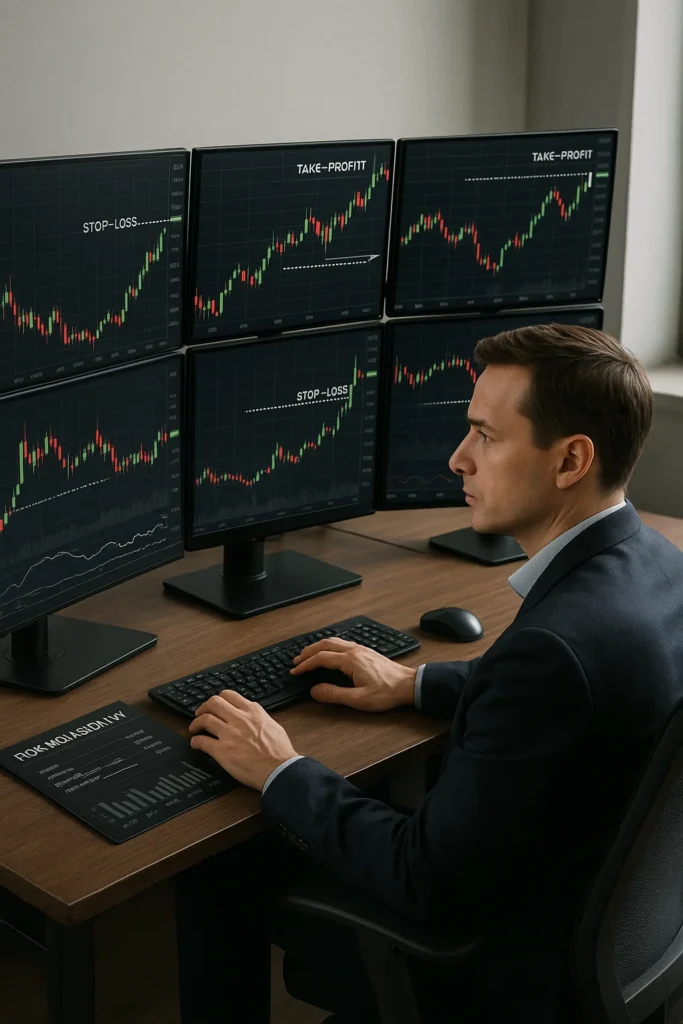
Stop-loss orders are the most essential tool for any trader to protect capital. During high-volatility news events, prices can spike unpredictably, making manual exits risky:
Fixed Stop-Loss: Place stops based on technical support/resistance levels.
Dynamic Stops: Adjust stops according to market volatility using ATR or moving averages.
Partial Stop-Losses: Exit part of your position while letting the rest run to capture potential gains.
Using stop-losses systematically ensures you can survive periods of extreme volatility without wiping out your account.
The Importance of Take-Profit Levels
While stops protect losses, take-profit levels lock in gains. Many traders focus only on limiting losses, but failing to set profit targets can reduce overall profitability:
Define realistic targets based on recent volatility.
Use trailing take-profits to maximize gains while locking in capital.
Align take-profit levels with risk-reward ratios to protect capital effectively.
Setting disciplined take-profit levels prevents giving back profits and maintains a positive trading balance.
Hedging Strategies to Protect Capital
Hedging is a sophisticated approach to safeguard your account during unpredictable news events:
Currency Pair Hedging: Take opposite positions in correlated pairs to offset potential losses.
Options Hedging: Use Forex options to limit downside while retaining profit potential.
Diversification Hedging: Spread trades across multiple pairs to reduce risk concentration.
Hedging is particularly effective for professional traders looking to protect capital while remaining active in volatile markets.
Understanding Slippage and Its Impact
Slippage occurs when your order is executed at a price different from your intended entry or exit, especially during high-volatility news events. Slippage can erode profits or increase losses. To protect capital:
Anticipate wider spreads during major news events.
Use limit orders instead of market orders.
Avoid trading thinly liquid pairs during spikes.
Managing slippage effectively prevents unexpected losses and ensures risk is contained.
The Value of Realistic Expectations
Many traders enter news-event trading with unrealistic expectations of huge profits. This often leads to overleveraging or impulsive trades. Protecting capital requires:
Accepting smaller, consistent gains over time.
Avoiding the temptation to “chase the market.”
Recognizing that surviving volatile periods is more important than maximizing profit on a single trade.
Traders who maintain realistic expectations are more likely to protect capital and achieve long-term success.
Using Volatility-Based Position Sizing
Volatility-based position sizing adjusts trade size according to market conditions. For example, during NFP releases, price swings can be 50–100 pips in minutes. To protect capital:
Calculate position size based on volatility indicators like ATR.
Reduce trade size when volatility is high to limit risk exposure.
Increase trade size only when market conditions are calm and predictable.
This approach ensures that capital is preserved even during extreme market movements.
Leveraging Historical Data for Protection
Analyzing historical reactions to news events allows traders to anticipate potential moves and protect capital:
Study past NFP, CPI, and central bank announcements.
Note typical volatility ranges and reaction patterns.
Plan entries, exits, and stop levels based on historical behavior rather than guesswork.
Using historical data increases the likelihood of making safer, informed decisions.
Preparing Mentally for Volatile Markets
Trading during high-volatility events is stressful. Emotional resilience is essential to protect capital:
Develop a pre-news routine to calm nerves.
Practice mindfulness or short breaks during spikes.
Focus on rules and strategies rather than emotional reactions.
A strong mental approach reduces impulsive decisions and reinforces disciplined risk management.
Final Summary
High-volatility news events in Forex trading present both opportunity and risk. While price spikes can create profit potential, unprepared traders risk losing significant portions of their account. The ultimate goal during these periods is to protect capital while remaining ready to capitalize on market movements.
Key strategies include:
Advance Preparation: Monitor economic calendars, identify key support and resistance levels, and plan trade setups.
Position Management: Reduce trade sizes, adjust leverage, and use volatility-based position sizing to limit exposure.
Protective Tools: Implement stop-loss, take-profit, and trailing orders, and consider hedging strategies.
Market Awareness: Track liquidity, monitor sentiment, and anticipate slippage to make informed decisions.
Discipline and Mindset: Maintain emotional control, stick to your plan, and set realistic expectations for profits and losses.
Continuous Learning: Journal trades, analyze historical events, and refine strategies to enhance risk management.
By consistently applying these principles, traders—whether beginners or professionals—can protect capital, minimize losses, and maintain long-term profitability in the unpredictable world of Forex trading. Survival and consistency in volatile markets ultimately outweigh short-term gains, making capital protection the cornerstone of sustainable trading success.
Take Your First Step Today
By now, you understand what is Forex trading and how it opens the door to both currency trading and commodities investing. While the market offers incredible opportunities, success comes only with education, patience, and smart risk management.
 If you’re serious about learning Forex, start with a demo account, test your strategies, and gradually move to live trading. Remember, every expert was once a beginner—your journey can start today.
Visit Our Website : Click Here
How to Open Your Exness Account
Getting started with Forex trading is easier when you choose a trusted broker. Exness is one of the most popular platforms worldwide, known for its transparency, low spreads, and beginner-friendly features.
Step-by-Step to Open Your Exness Account:
Go to the official Exness website → https://one.exnessonelink.com/a/jryz18ii06
Click on “Create Account” and fill in your email and password.
Verify your identity by uploading the required documents.
Choose your trading account type (Standard or Professional).
Deposit funds and start trading with live markets.
 Watch this quick guide on YouTube: Click Here
Opening an Exness account takes just a few minutes and gives you instant access to Forex, commodities, and indices trading.
STAY CONNECTED WITH MK TRADER FOR MORE SUCH CONTENT
